


Anchoring and Mooring
Lowering and Raising the Anchor
Lowering the anchor
Before the anchor is lowered, the vessel must be stopped relative to the land. A check with a transit will ensure this. The anchor should be completely free to run but held by a crew member.
When the command is given to lower the anchor, it should be done hand over hand, so that the chain runs out smoothly. This is to prevent a pile of chain landing on top of the anchor, causing is to be fouled.
A common practice is to reverse gently away from the anchor so that the chain is laid out on the sea bed, in many cases this will happen naturally with the action of the wind and tide.
Security of the anchor
Once anchored, checks should be made that the anchor is not dragging. This can be done by:
- Reversing gently against the anchor to bed it in.
- Checking transits ashore for movement.
- If you plan to anchor overnight, take some bearings of lights that can be checked again in the dark to ensure you are not dragging.
Signs that the anchor may be dragging are:
- The shore transit is not steady (remember to allow for the boat swinging).
- The anchor cable is not taut.
- The noise of the anchor chain "grumbling" as it drags on the bottom.
- Large changes in depth (use the anchor alarm function on the echo sounder, allow for tidal rise and fall).
- The GPS anchor alarm activates (allow for any "wobble" in position caused by the errors in the system).
- If there is no tide, and the boat sits broadside on to the wind.
Anchoring signals
The anchor ball should be raised in the forepart of the vessel, and if it will be dark, the all round white anchor light illuminated.

The anchor light may be on the top of the mast or just above deck level. The advantage of a masthead light is that it is easily seen from a distance. The advantage of a lower light is that it illuminates the deck for ease of moving around but more importantly, it enables other vessels to see your vessel when they are close (most people will not be looking up in the air at an anchor light 40 to 50 feet above their head when motoring in to confined anchorage). A light displayed on the foredeck can be an electrical on a cable that is plugged in to a socket on the deck or if power consumption is an issue, it could be an old style paraffin lamp. In either case, I recommend displaying it slightly to one side of the mast so that it is not obscurred by the mast to any vessels approaching from astern.
When anchoring in areas that are likely to be busy at night, like near a fishing harbour I have been known to sleep on deck with a big torch to illluminate the yacht if another vessel looks to be getiting close.
Raising the anchor
Instead of struggling to pull the anchor chain in, the engine should be used to do the hard work. The person bringing in the chain should only be lifting the weight of chain, not pulling the boat up to the anchor.
To this end, it is best if one of the crew is used to point the direction the chain is lying in. The skill in this is to anticipate where the boat needs to turn to next rather than waiting until it is pointing directly along the chain. If you wait until the boat is pointing along the chain, you will often overshoot and the person hauling the chain in will have to lock the chain off on a cleat to prevent the wight of the boat puling all the chainback out again.
The helm should be using short bursts of power to keep the boat on course, not continuous power.
On some boats, it may be necessary to have someone stationed below to help pull the chain down the hawse pipe and to spread the chain out in the locker to prevent jams.
If the bottom is muddy, a bucket and brush should be available to clean the anchor before the mud gets on to the deck and sails. If the anchor is very muddy when it is near the surface, you could leave it just below the water and reverse the boat for a while to clear as much mud and sand before bringing it on deck.
If the anchor chain becomes very tight it may be because the anchor is very well dug in. In this case, fasten the chain off and wait for the boat to pull it clear of the bottom or in a severe case, gently motor forwards over the anchor. This will reverse the anchor and release it from the bottom.
Anchoring overnight
If you plan to anchor overnight you should prepare a plan for departing the anchorage in the dark if conditions change and it is no longer safe to remain in the anchorage. Experienced skippers will leave the boat in a condition that it can be quickly got under sail if necessary, so the mainsail cover is left off and the headsail still attached to the forestay.
If there are hazards close to the anchorage, some pre-prepared leading lines that can be identified in the dark will make life much easier and should ensure the boat can get out in to clear water if necessary.
Care for the environment
Environmental damage caused by yachts and dive boats to sensitive areas is becoming an important issue. The attraction of many of the places we visit in yachts is the natural environment, one of the sights that impressed me the most in the Caribbean was snorkelling from the side of the boat at The Baths in Virgin Gorda. If you get the chance to go there, it will feel like you are swimming in a perfectly clear fish tank, the fish life is virtually tame and there are hundreds of different species that pretty much ignore a swimmer.
There are many places like this that are becoming more accessible and popular, if we do not take care of them now they will quickly be damaged by careless anchoring and disposal of yacht's wastes.
The best organised places are banning anchoring and installing mooring systems that minimise the damage to the surrounding reefs, if you sail in an area where this is the system, make sure you use the buoys that have been provided.
Factors affecting the decision of where to anchor
- Depth: Is the water shallow enough for the length of cable carried?
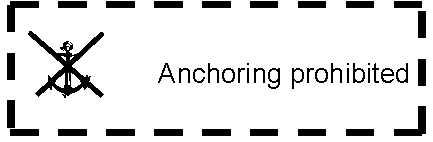
- Local bylaws: Busy harbours may ban anchoring altogether, and certainly, it is not advisable to anchor in the fairway of busy harbours.
- Anchor watch: Do you need to set an anchor watch? Not a popular plan, with most people on holiday. Will the anchor alarm on the echo-sounder or GPS be sufficient to warn you if the anchor drags?
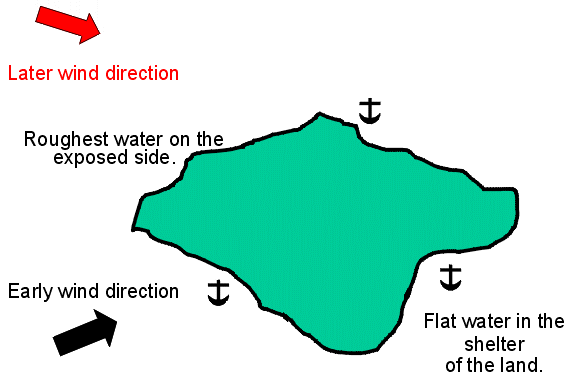
- Shelter: One of the main reasons to anchor is to stop and rest. If the boat is rolling and bouncing you will not find the stay very restful, especially at night. The best anchorage is usually at a point where the wind is offshore and there is little current. Consider that a place which is completely sheltered when you arrive may well change completely if the wind direction shifts or the tide runs in a different direction.
- Holding: The quality of the bottom is indicated on the chart. Ideal materials are mud and sand; both will provide a good surface for the anchor to dig into. The worst holding is often in rock and weed, weeds tend to bind around the anchor and prevent it from digging in. An anchor will only hold on a rock bottom when it hooks into a protrusion or crack in the rocks and if the wind or current change the anchor will drag until it catches on something else.
Hydrographic publication 5011, Symbols and Abbreviations, gives the full range of abbreviations used on Admiralty charts. All yachts should have a copy of this booklet aboard, one can be ordered here.
M = Mud
R = Rock
Wd = Weed
Wk = Wreck
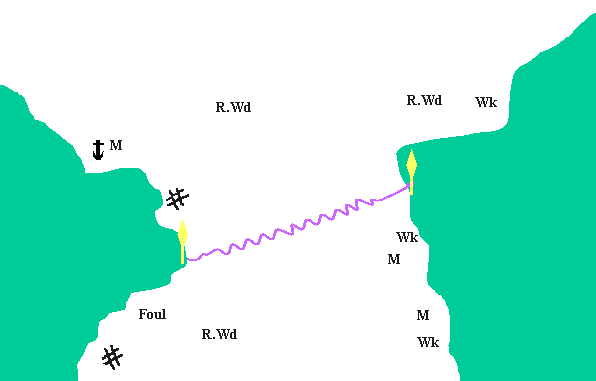
- Obstructions on the bottom: Before anchoring check the chart for cables or gas pipes, the shoreward ends may be marked by diamond shaped yellow or white signs. There may also be wrecks or remains of wrecks on the bottom; these may be marked by the word Foul or the symbol #. Often areas where there are obstructions or it prohibited to anchor have an anchor symbol with a cross and perhaps a limit symbol.
- Facilities: Is it possible to land, are there any facilities once you get there? A good pub is always nice! Remember that a beach which is easy to cross in one tidal condition may change or disappear completely when the tide changes.
- Departure in an emergency: If the conditions change, can you leave the anchorage in a hurry, perhaps in the dark? It may be a good idea to pre-plan clearing lines for a night- time departure.
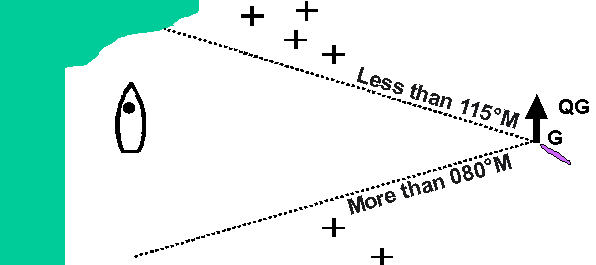
In the above example, keeping the Quick green flashing light on the buoy on a bearing of between 080 and 115 degrees will ensure that you pass between the rocks. Note that if there is a tide running, these clearing lines may be very different to the course the vessel may have to steer.
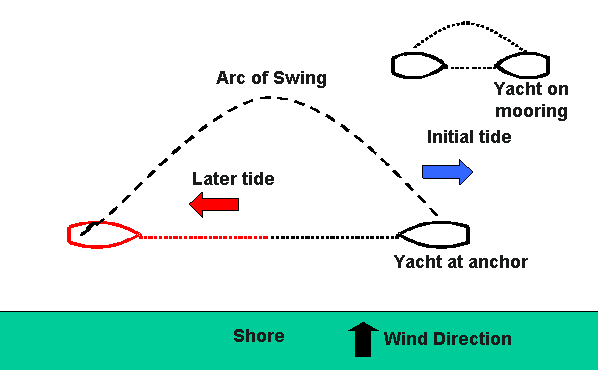
- Swinging room: When the wind or the tide change the boat will swing to a new direction, will it swing clear of moored vessels, the shore or any obstructions?
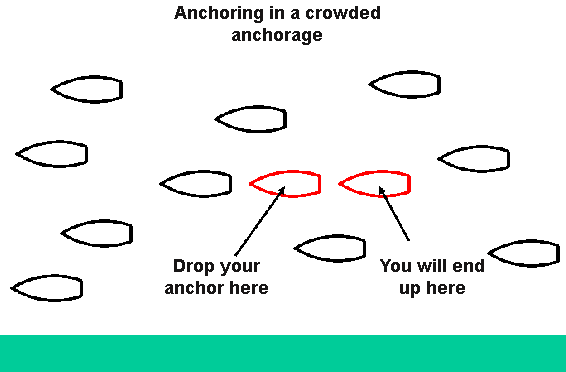
- Crowded anchorages: In a crowded anchorage, it is often better to motor close up the stern of a similar vessel to your own which is already at anchor, lower your anchor, then drop back away from the other craft as the chain pays out. This will make the most of the available space.
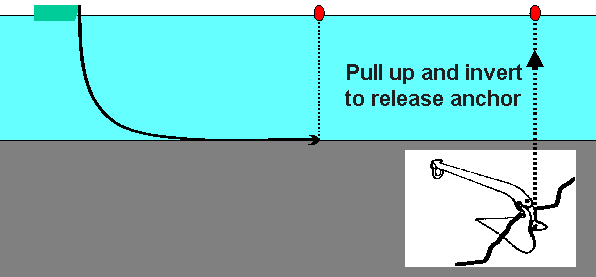
- Tripping Line: A tripping line is a line attached to the lower end of the anchor. It enables you to upend the anchor if it becomes stuck under an obstruction. The disadvantages are that you or another vessel can catch them on the propeller or another vessel may try to use it as a mooring buoy! I would normally only advocate the use of a tripping line if I was in a place where there may be debris on the bottom, such as in a harbour area.
Sailtrain.co.uk is free to use, but if you feel you would like to contribute to the running and development costs you can donate via Paypal:
Additional Resources:
